The Weekly: Structured Prediction Markets
JUL 13, 2026
This week covers the rise of structured prediction markets and the launch of FATE, a new framework turning event-based prediction markets into tradeable on-chain baskets. The first products, Order and Chaos, let users express macro and geopolitical theses without managing dozens of individual contracts. Also covered: BTC's tightening wedge pattern with bullish RSI divergence, SOL/BTC breaking out, crypto's deep discount versus Nasdaq tech, and the latest Aave, Pendle, and Lido yield benchmarks.
Re7 incubated @fate_computer, a controlled experiment in prediction-market baskets.
Prediction markets are increasingly being explored as sources of event-based information and market-implied probabilities. The market for truth, offering unique hedging opportunities.
Fate is an experimental interface, organising publicly available prediction-market data into thematic baskets. The first theme is Chaos vs Stability.
Fate also introduces a key feature, previously missing from the prediction market structure: roll. As markets expire, baskets roll into new methodology-selected markets, turning them into instruments working in perpetuity.
For more information: https://fate.computer/
Weekly Summary
We cover:
The evolution of prediction markets
Why thematic strategies matter
FATE: a new prediction market primitive
Market update
Structured Prediction Markets
Prediction markets have quietly become one of crypto's most successful consumer products.
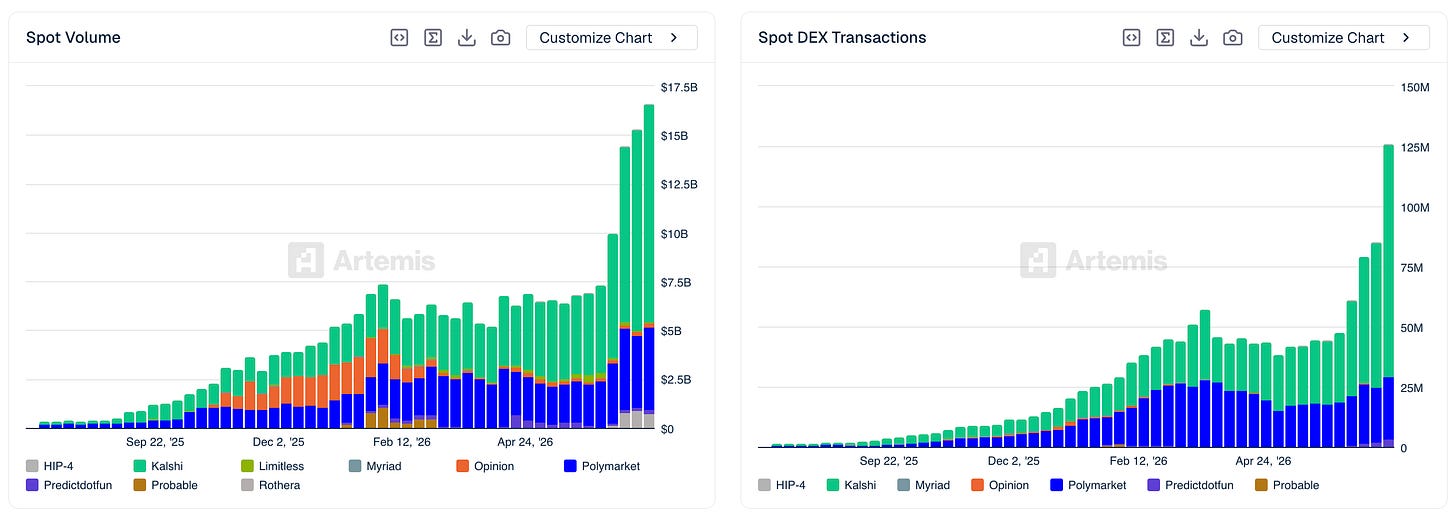
Volumes and transaction count are consistently printing new ATHs each week.
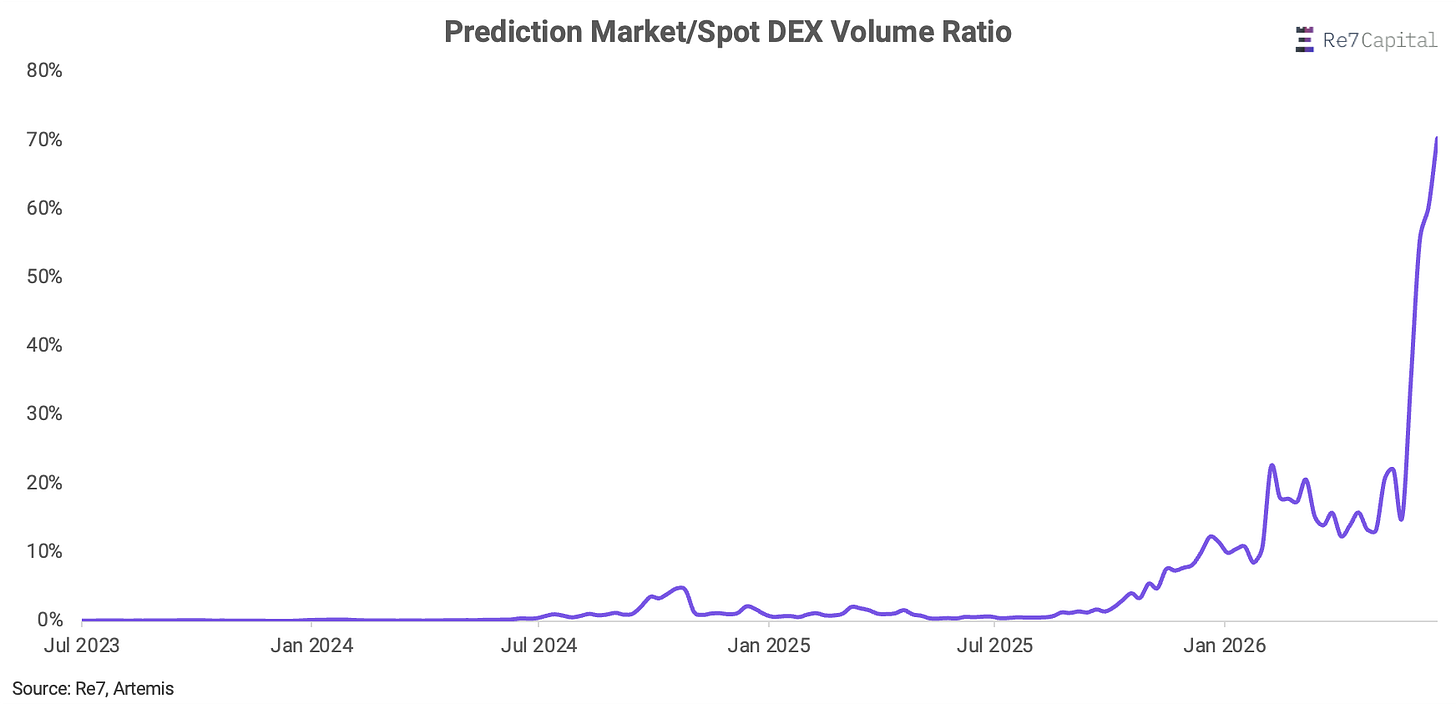
More interestingly is that prediction market-based volumes are now 70% of all on-chain spot DEX volumes and is on track to overtake within 3 months.
Prediction markets have become popular because they allow people to express views on everything from politics and macro to geopolitics, sport and technology. In many cases, they have become a better gauge of sentiment than traditional polling or media narratives.
The problem is that expressing a view today is surprisingly difficult.
If you believe tariffs will rise, geopolitical tensions will escalate, or a particular political party will outperform, you don’t buy “the thesis”. You buy dozens of individual event contracts. Each has its own liquidity, expiry, settlement criteria and execution risk. As markets resolve, positions need replacing if you want to maintain the same exposure.
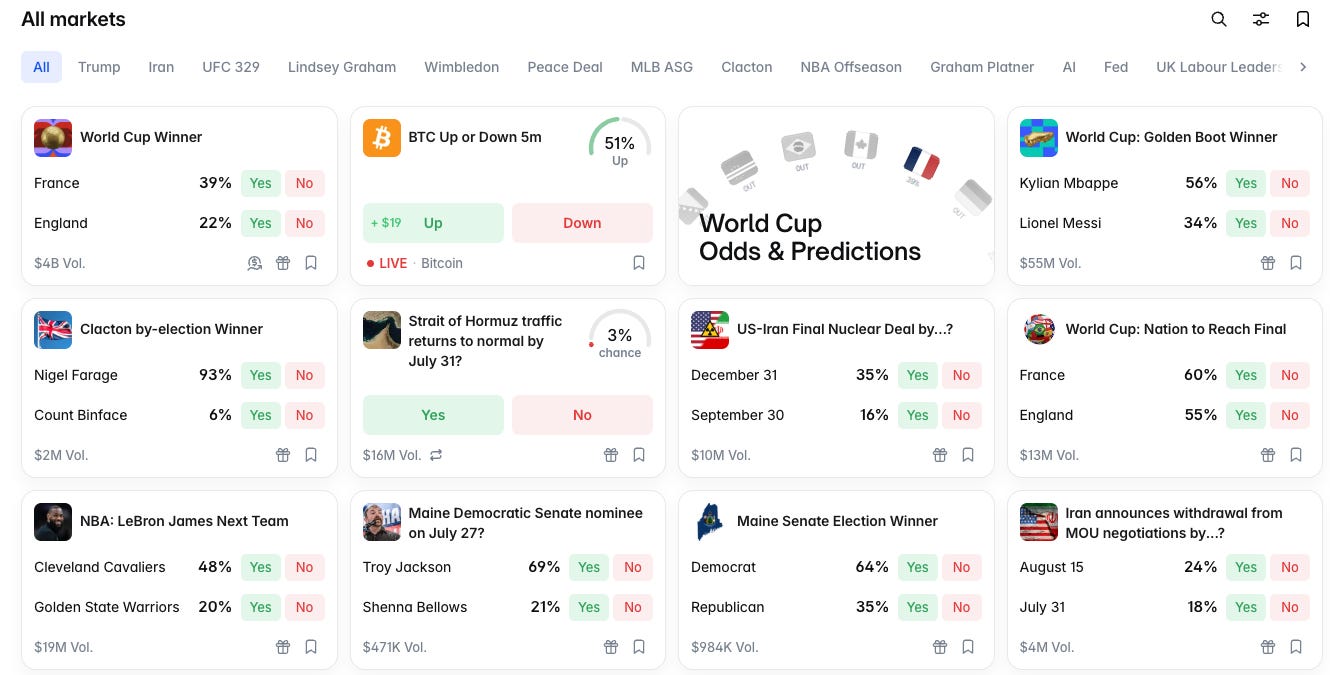
Polymarket homepage showcasing disparate markets and themes.
In other words, prediction markets have solved price discovery, but they haven’t yet solved portfolio construction.
Just as ETFs abstract away the complexity of buying dozens of individual stocks, prediction markets need products that abstract away hundreds of individual event contracts into a single, investable strategy.
Users should be able to express a view without worrying about market selection, rebalancing, rolling positions or execution.
This week we're excited to announce FATE, our framework for turning prediction-market strategies into tradeable on-chain products.
The first products built on FATE are Order and Chaos—two thematic strategies representing opposing worldviews.
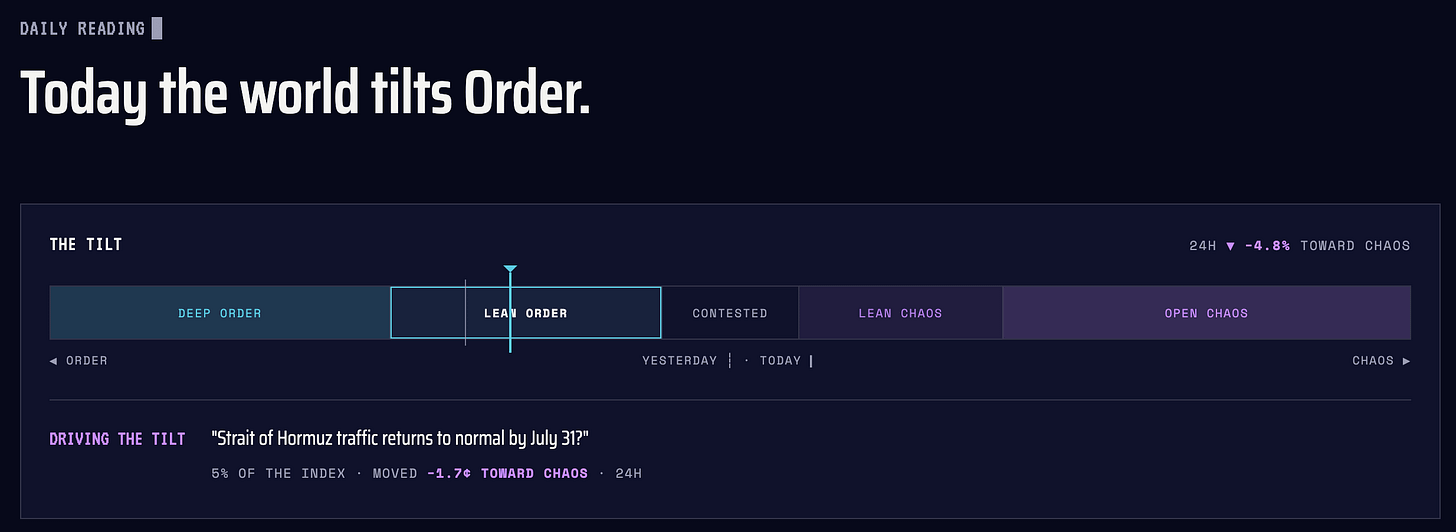
Order expresses a world of improving geopolitical stability, easing macro uncertainty and greater policy predictability.
Chaos expresses the opposite: escalating conflict, political disruption and rising uncertainty. Rather than managing dozens of individual event markets, investors simply gain exposure to a diversified basket aligned with that thesis.
Rather than buying individual event markets, FATE allows users to gain exposure to a managed basket of positions representing a single thesis.
The underlying markets can evolve over time as events resolve, while the product continues to track the strategy the user actually wanted to own.
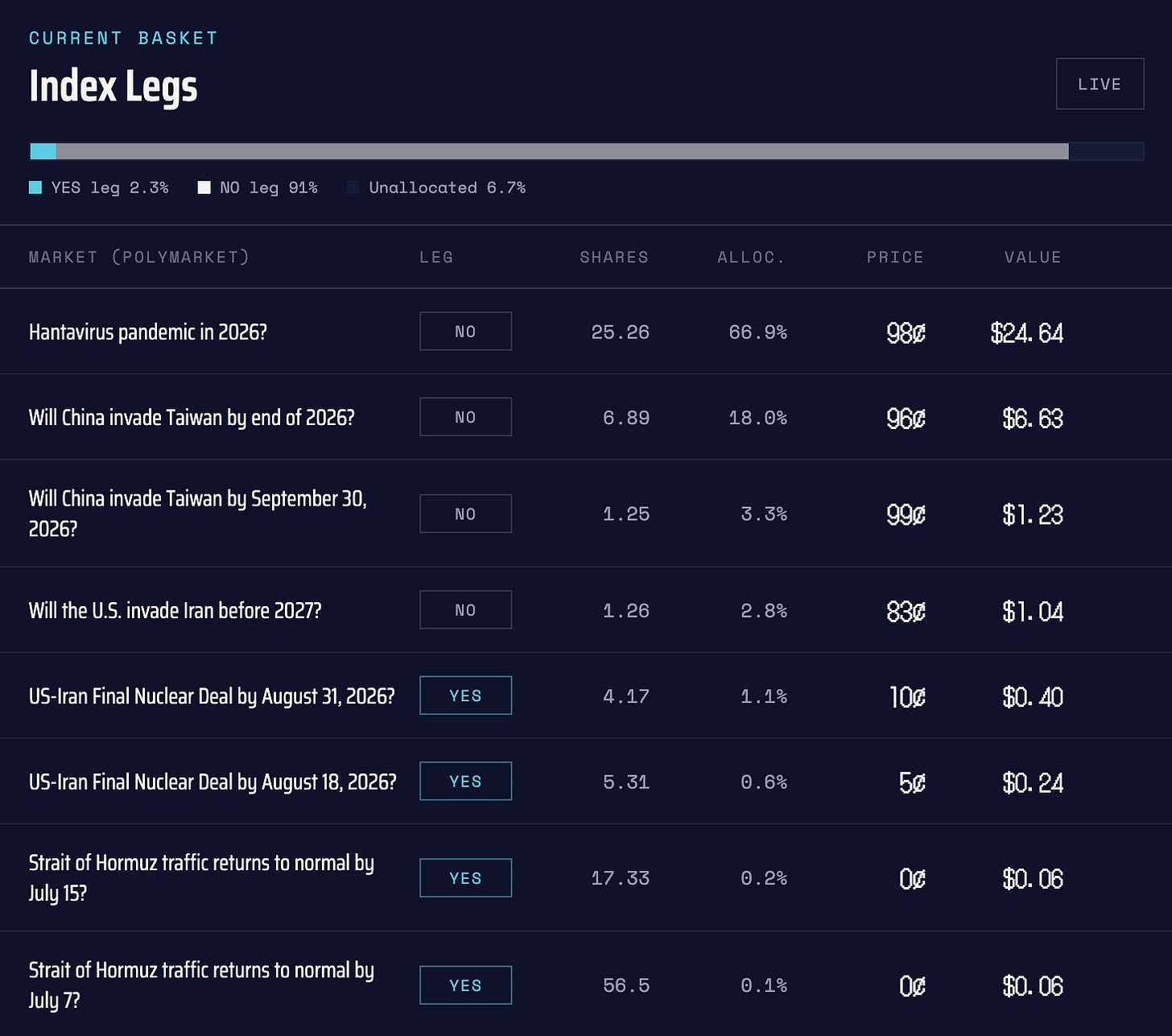
Fate Order index market basket.
Just as ETFs transformed individual stocks into investable themes, we believe prediction markets will evolve from isolated events into investable strategies.
Market Update
Crypto was largely unchanged last week, but volatility continues to compress inside a clear wedge.
BTC oscillated ~$64k throughout the week.
The setup increasingly resembles a coiled spring. With RSI showing bullish divergence, the next pressure release looks more likely to resolve higher than lower.
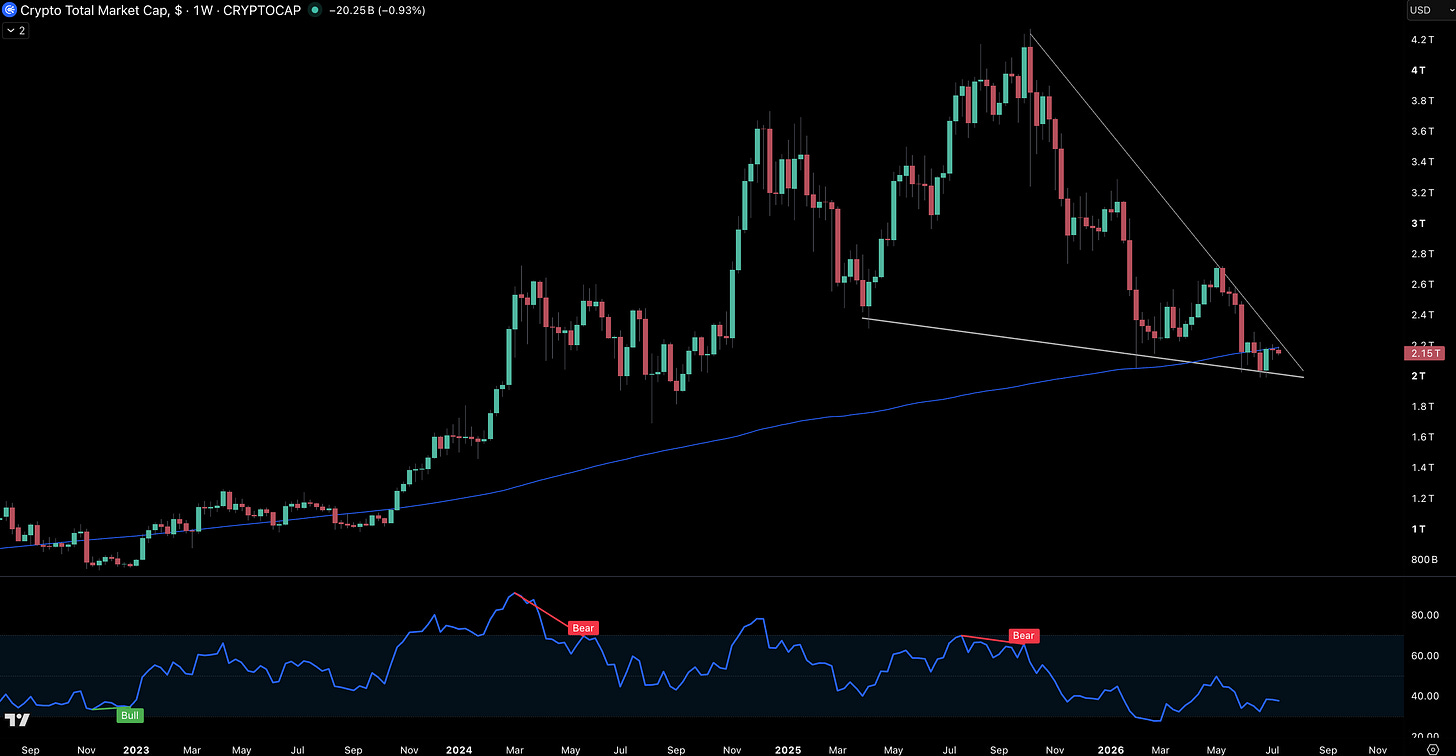
Global crypto market capitalisation ($).
Some L1 ratios are arguably signalling a constructive view looking ahead too (e.g. SOL/BTC) by already breaking out of their own wedge pattern.
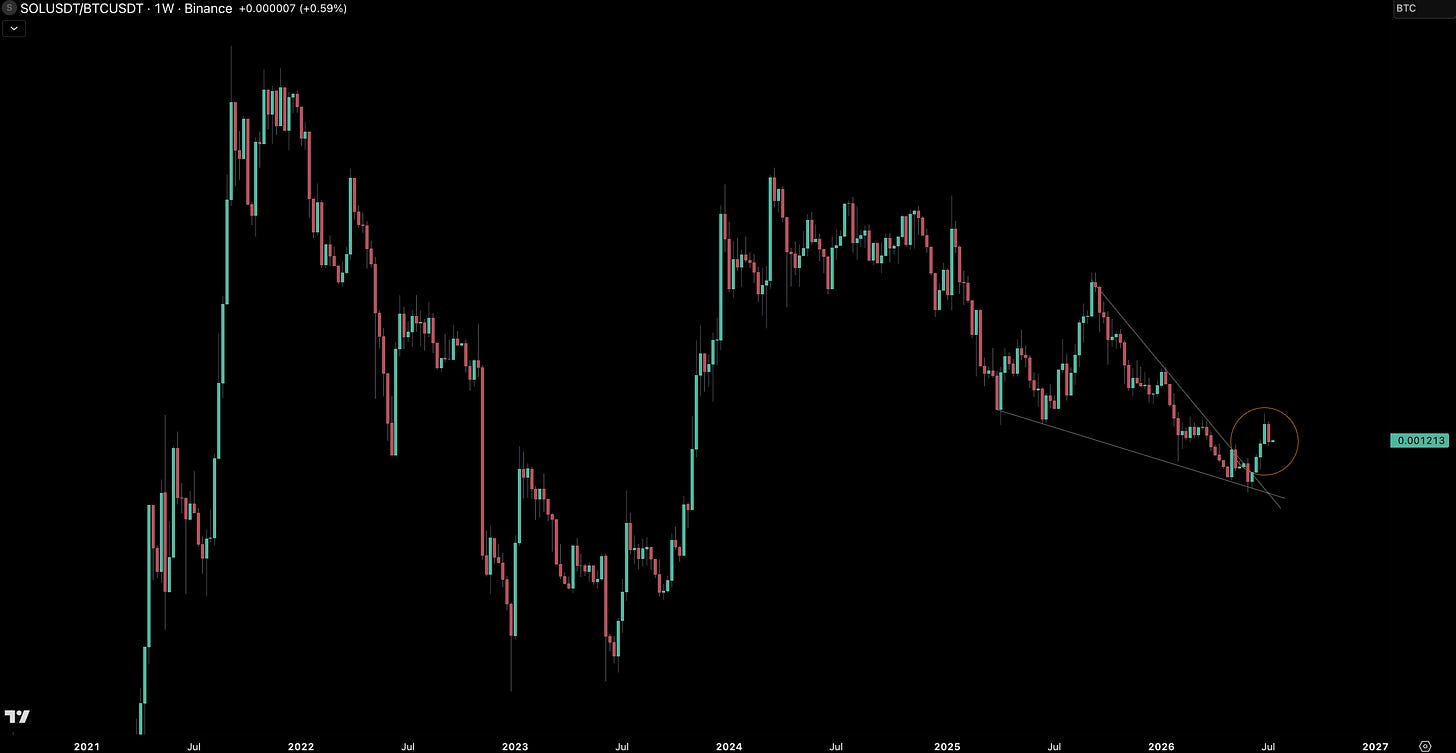
SOL/BTC ratio (weekly).
Korea’s KOSPI is making headlines for its 9% drawdown with fears of a semi conductor slowdown.
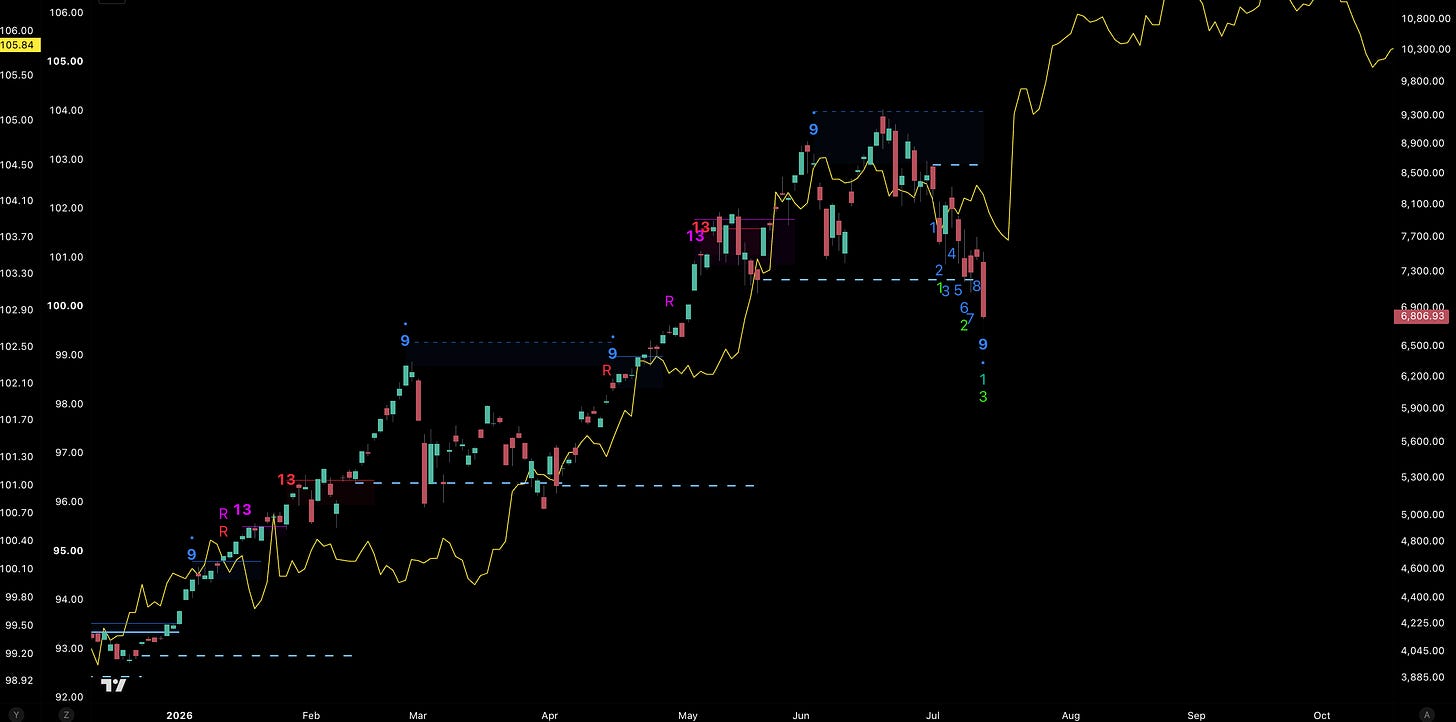
KOSPI index vs. Global liquidity index (10 week lead).
Meanwhile, AI and large-cap tech have already been rewarded for the next phase of digital infrastructure demand. Crypto has not.
The Crypto/NDX ratio shows that disconnect clearly. After two years of underperformance, crypto is back near long-term relative support and deeply oversold versus high-growth technology.
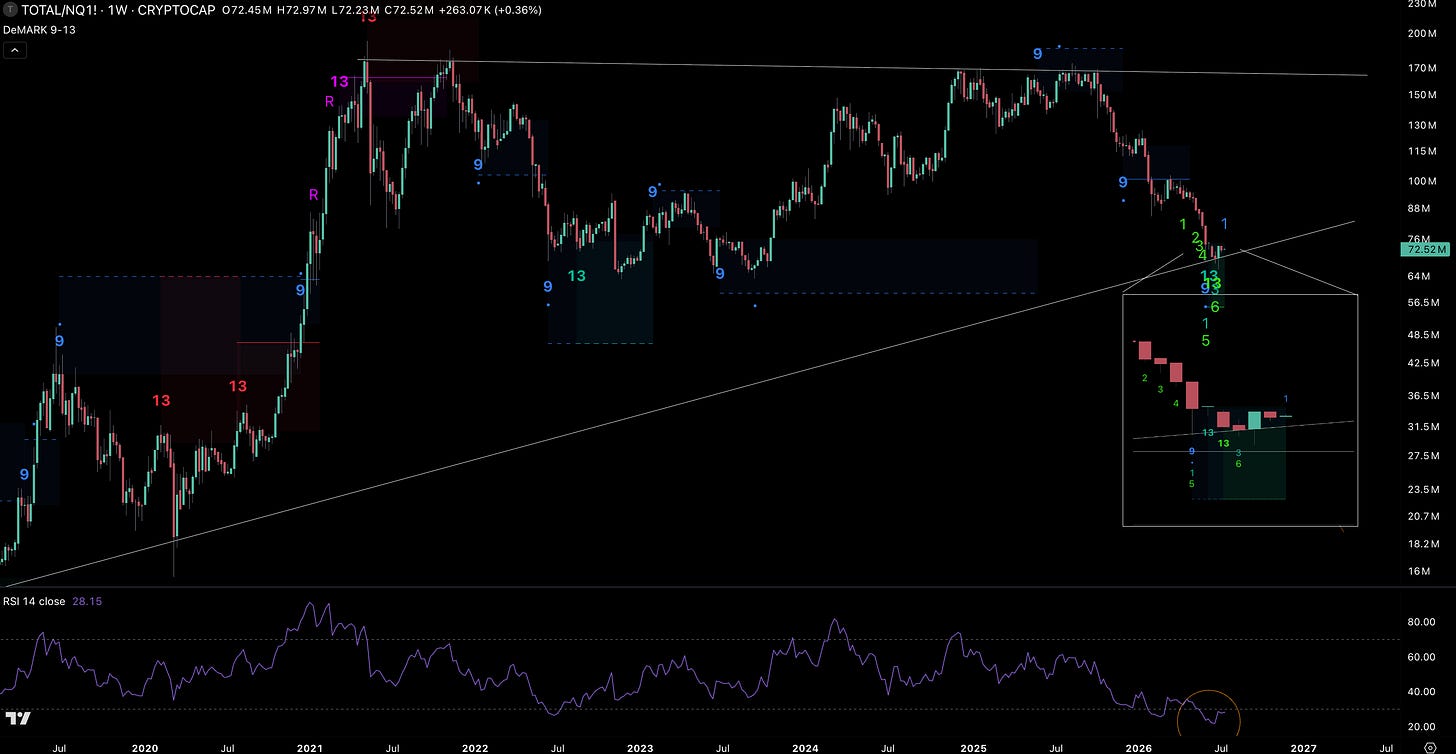
This matters because crypto is increasingly exposed to the same infrastructure themes the market is already paying for elsewhere: AI compute, stablecoin settlement, tokenisation, machine-native payments and on-chain capital markets.
The setup is not simply “crypto is cheap.” It is that one part of the digital infrastructure trade has already re-rated, while crypto remains the lagging expression.
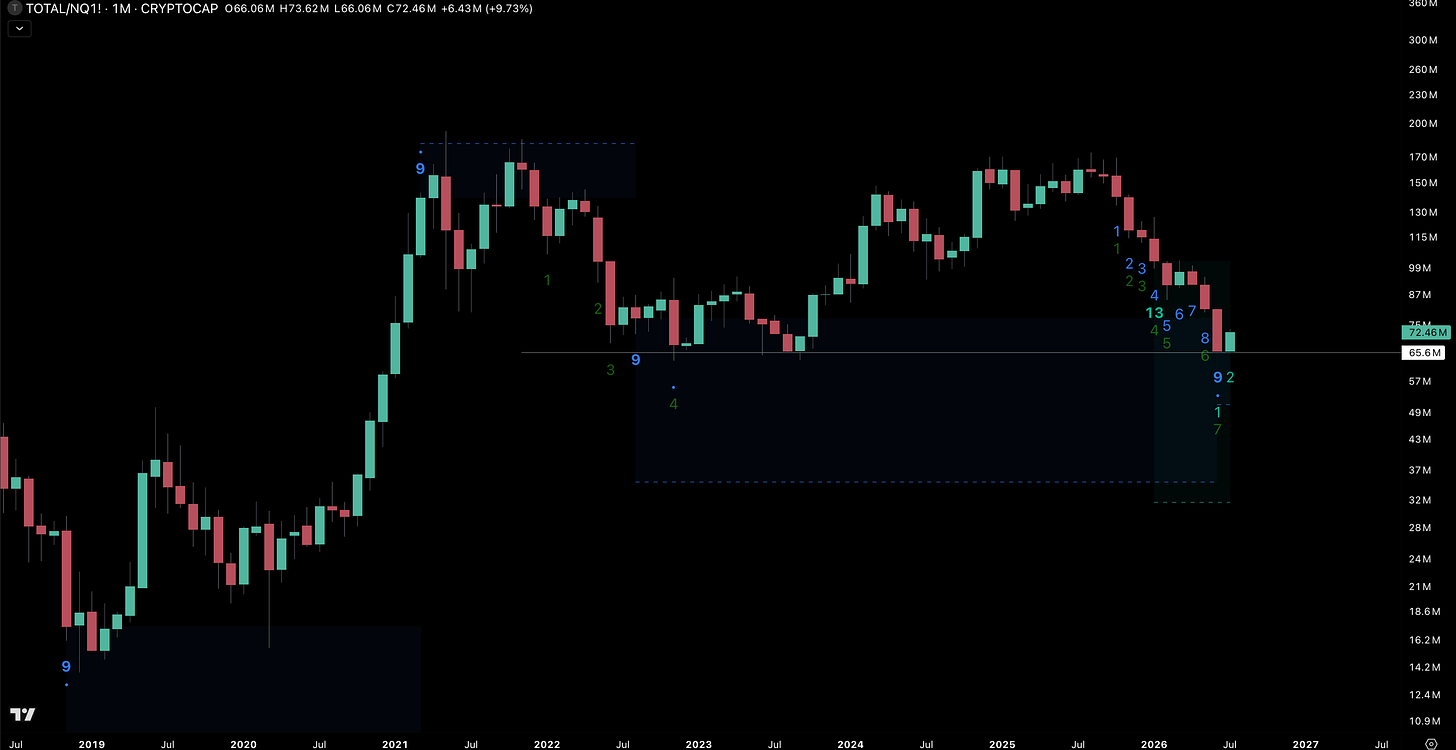
On the monthly timeframe, the ratio has refused to break cycle lows putting in a ‘9’ DeMark count in June - where 9s have been historically reliable bottom/top signals.
State of Yields
Stablecoin lending yields:
~3.27% on Aave (USDC) — utilisation rates have come down slightly to 90%.
~3.82% on Aave (USDe) — utilisation at ~60%. Slightly higher utilisation vs. last week.
Fixed-rate DeFi lending: yield premium in fixed markets marginally expanding from last week:
Pendle sUSDAi: ~9.8% (Oct–Feb 2026 maturities)
sUSDe: ~4.35%
ETH yield benchmarks:
Lido staking: ~2.19% -slight decreased from last week.