Weekly: Tension Without Resolution
MAR 23, 2026
This week’s Weekly from Re7 breaks down a volatile stretch for global markets where headlines once again drove price action. We look at how renewed US–Iran dialogue pulled oil lower, how BTC and alts rebounded from February lows, and what gold’s sharp swings reveal about inflation expectations. Despite fragile sentiment, the broader cycle still points toward recovery, anchored by growth resilience, easing liquidity, and contained financial conditions.
Last week, Telegram’s in-app wallet has been delivering yield on USDT holdings for several weeks now, up to 18% opportunities powered by Re7 Labs. This sustained rollout is driving mainstream adoption, providing user-friendly access with institutional-grade yield strategies.
Re7 Capital is shortlisted for Risk-Adjusted Returns of the Year at the Hedgeweek® European Awards 2026, affirming our focus on consistent performance across digital assets and TradFi. We’re also shortlisted in six categories at the Hedgeweek® Global Digital Assets Awards, spanning Discretionary Fund, Market Neutral Fund, and Multi-Strategy Fund (Annual/Sustained Excellence).
Weekly Summary
We cover:
Bearishness becoming consensus
The volatile price swings of markets
The impact of de-escalation/escalation of assets cross-sector
State of the Yields
Tension Without Resolution
All Eyes…Remain on Oil (again)
Last week, we noted that conflict developments would be critical in determining whether markets move into a more adverse regime.
At the same time, the underlying cycle continued to point toward recovery as the path of least resistance, despite the prevailing uncertainty.
It’s been another headline-driven, volatile week, with investors watching oil as a key proxy for inflation expectations and geopolitical risk, which in turn drive moves in yields and broader risk assets.
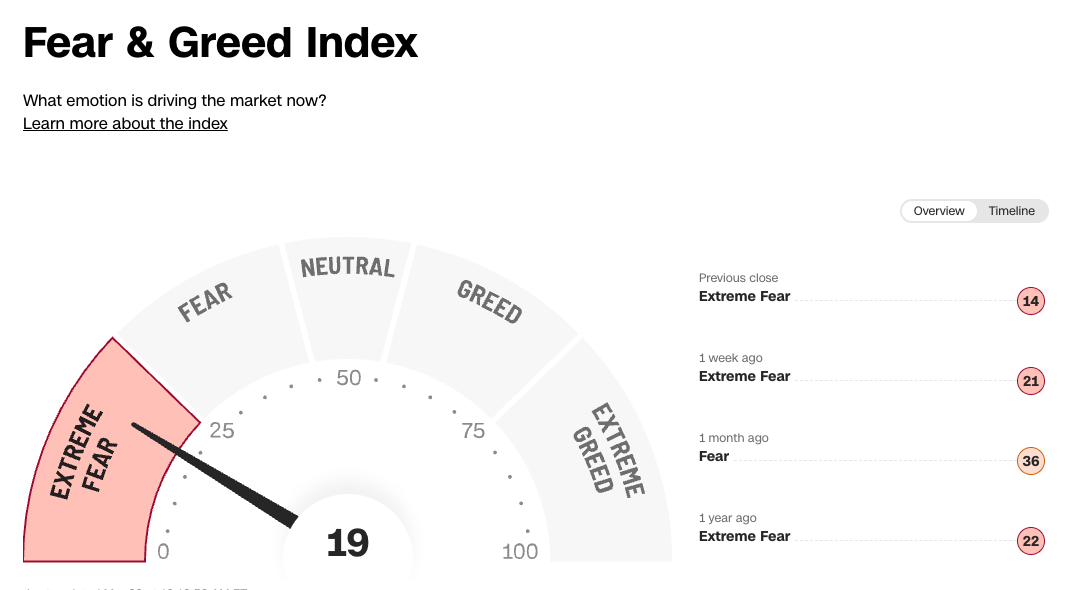
Positioning has skewed defensively in risk assets like equities, reflected in sentiment gauges such as the CNN Fear & Greed Index now moving into extreme fear.
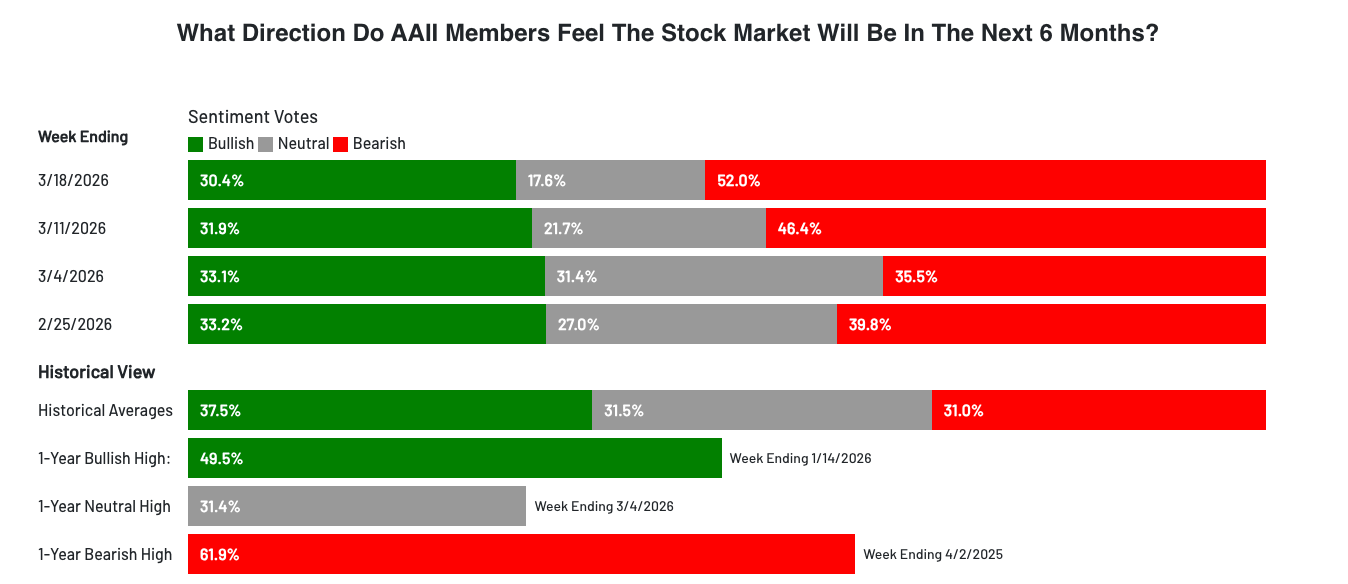
The American Association of Individual Investors survey shows bearish sentiment above 50%, reinforcing the extent of the recent shift in positioning.
Yet, the swing into optimism can turn just as quickly as the swing into fear. And that’s the point. All of this can turn on a dime. And on Monday, we saw another case of this…
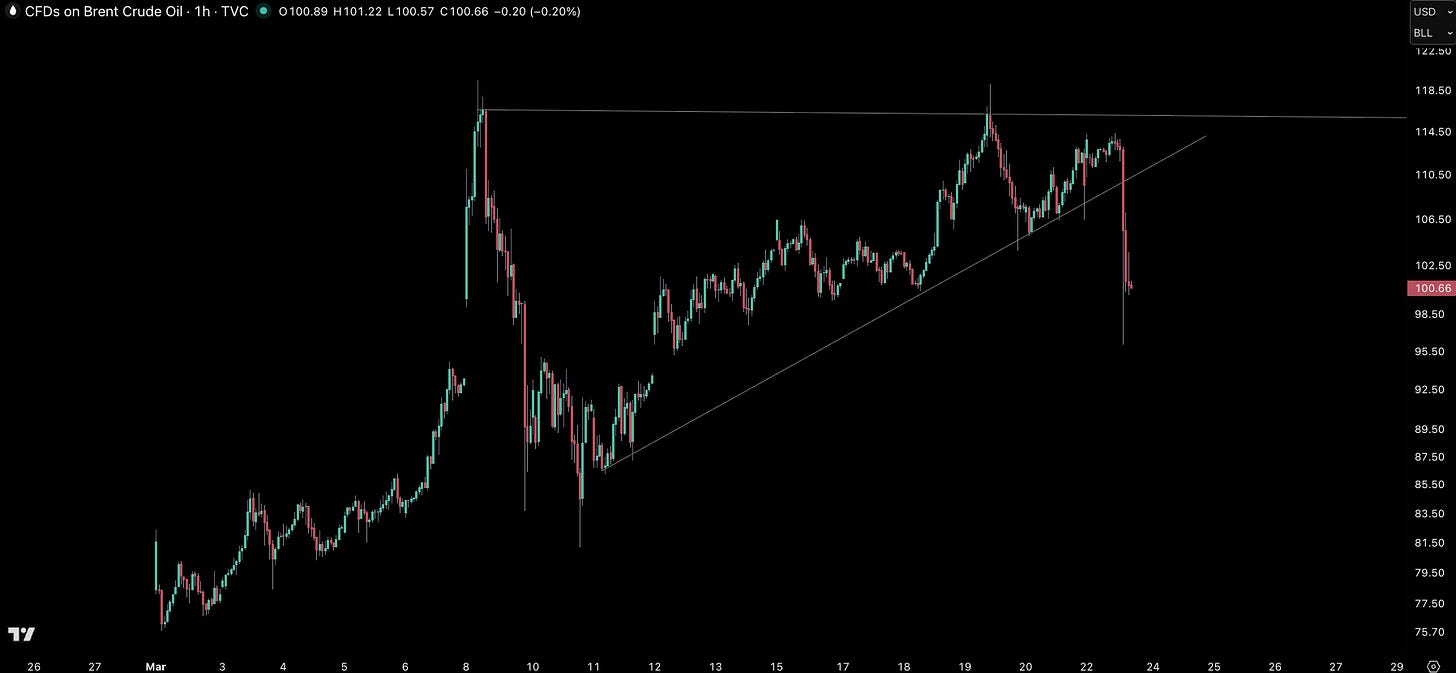
Headlines around renewed US–Iran dialogue—including comments from Donald Trump—acted as a catalyst for a positioning unwind, sending oil lower, yields down, and risk assets higher. One headline, one sharp recovery.
This kind of reaction shouldn’t really be surprising—without escalation, the underlying backdrop remains one of resilient growth, lower dollar, lower inflation, rate cutting direction etc.
Brent oil has now broken below its March trend after being unable to get above $120.
BTC has re-bounded strongly off its channel lows to >$71k. A clearer momentum break is now likely to no longer be $74k per se but a break out of its larger wedge pattern to the upside.
This outcome will likely depend on investors seeing clear resolution in the Middle East conflict.
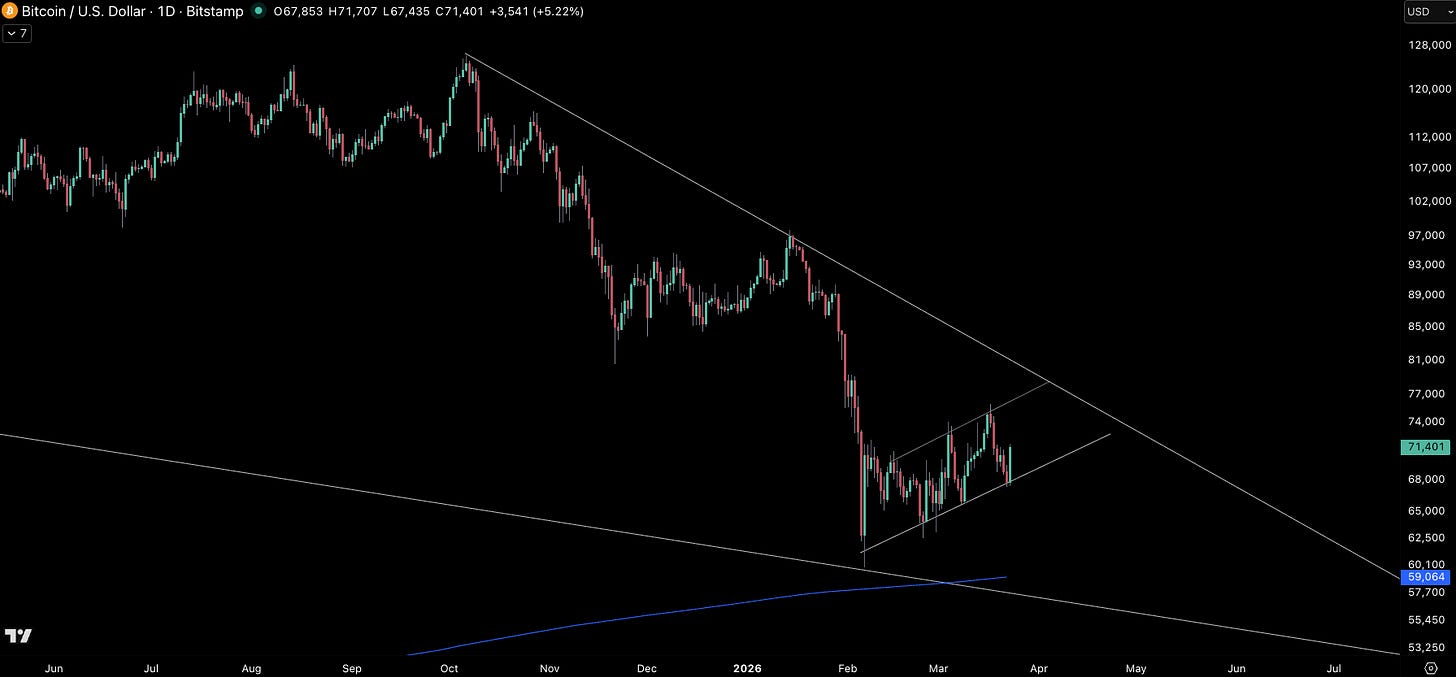
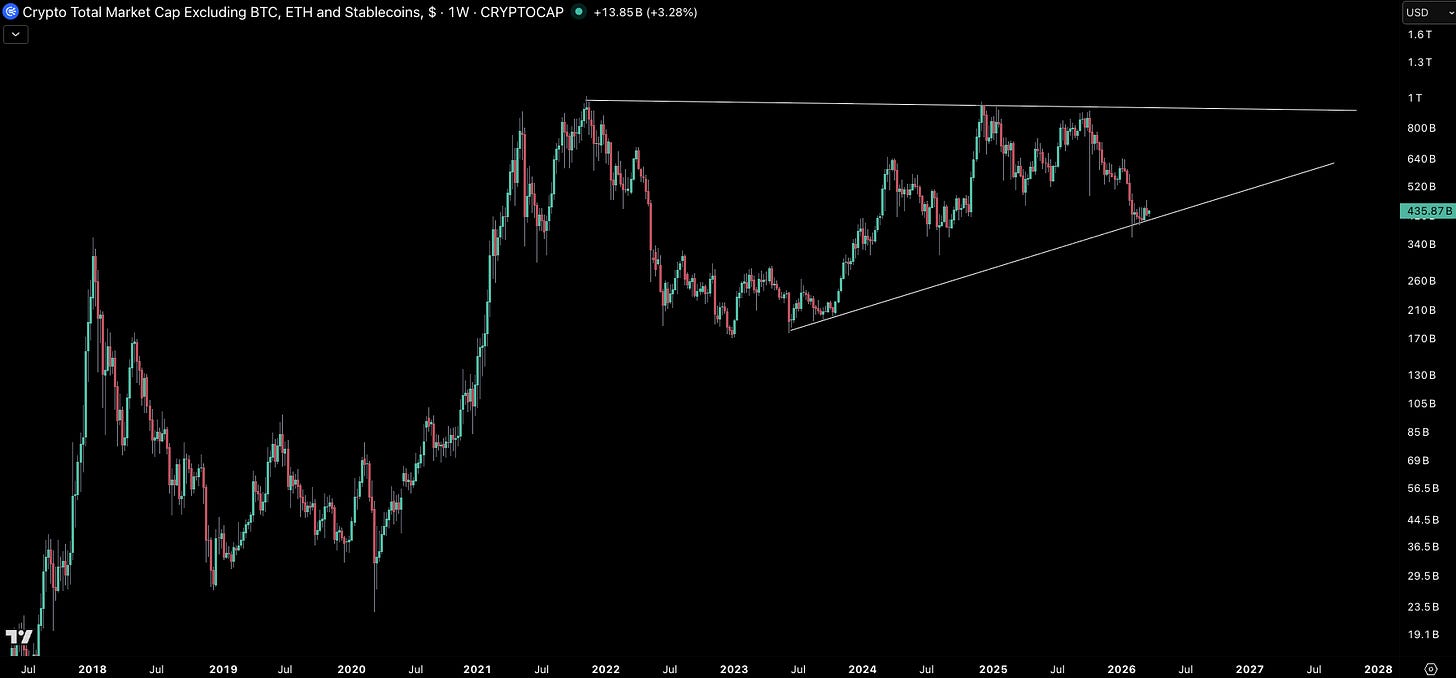
More broadly, the rebound in BTC since Feb comes as we see a re-bound in the alt market (+21% off Feb lows), outperforming BTC by +6%.
A de-escalated outcome in the Middle East coupled with continued easing on the US side could add more upwards pressure of alts > beta.
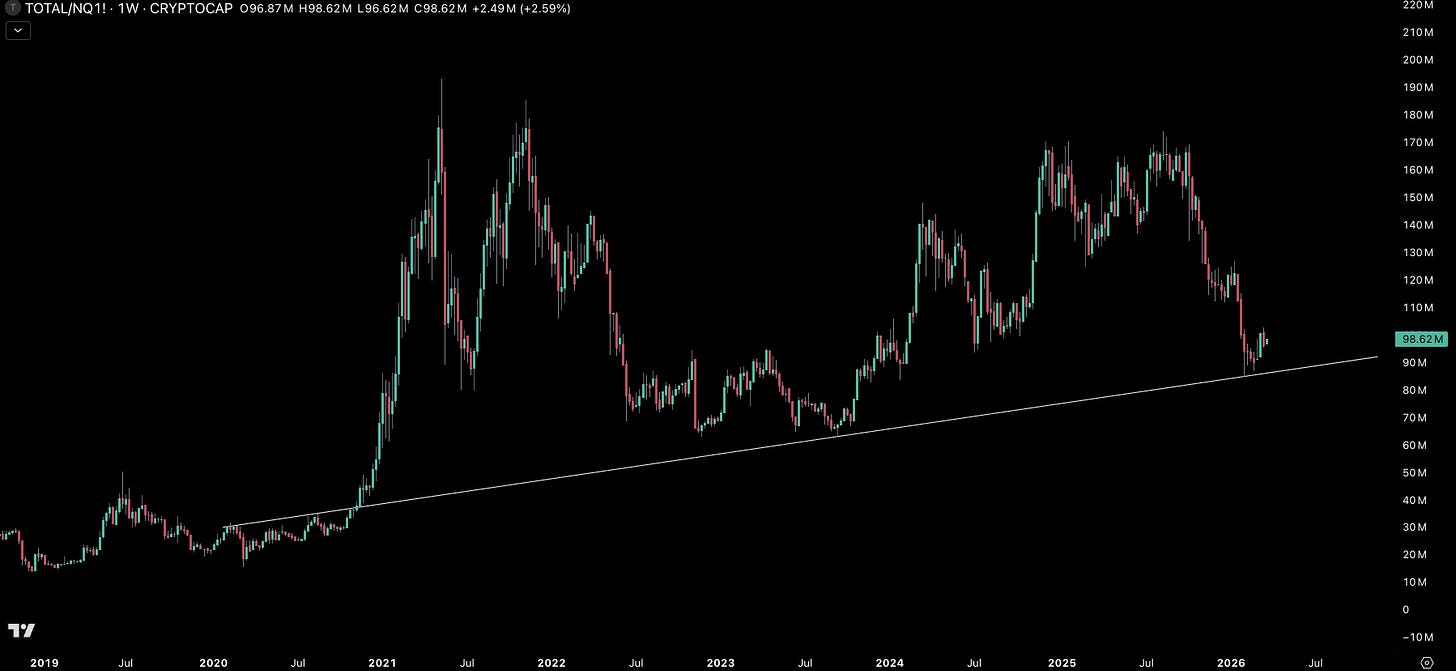
Crypto is outperforming QQQ this week so far by +2.5%. The crypto/NASDAQ relationship suggests investors do not yet see a material, structural breakdown in growth or easing.
This only shifts if the conflict materially disrupts growth, bringing forward a downturn as the base case.
On Gold
Gold’s sharp retreat on Monday (-9%) came mainly coming from stronger dollar and higher treasury yields off the back of renewed inflation fears from energy disruptions. Gold has since re-bounded (+11%).
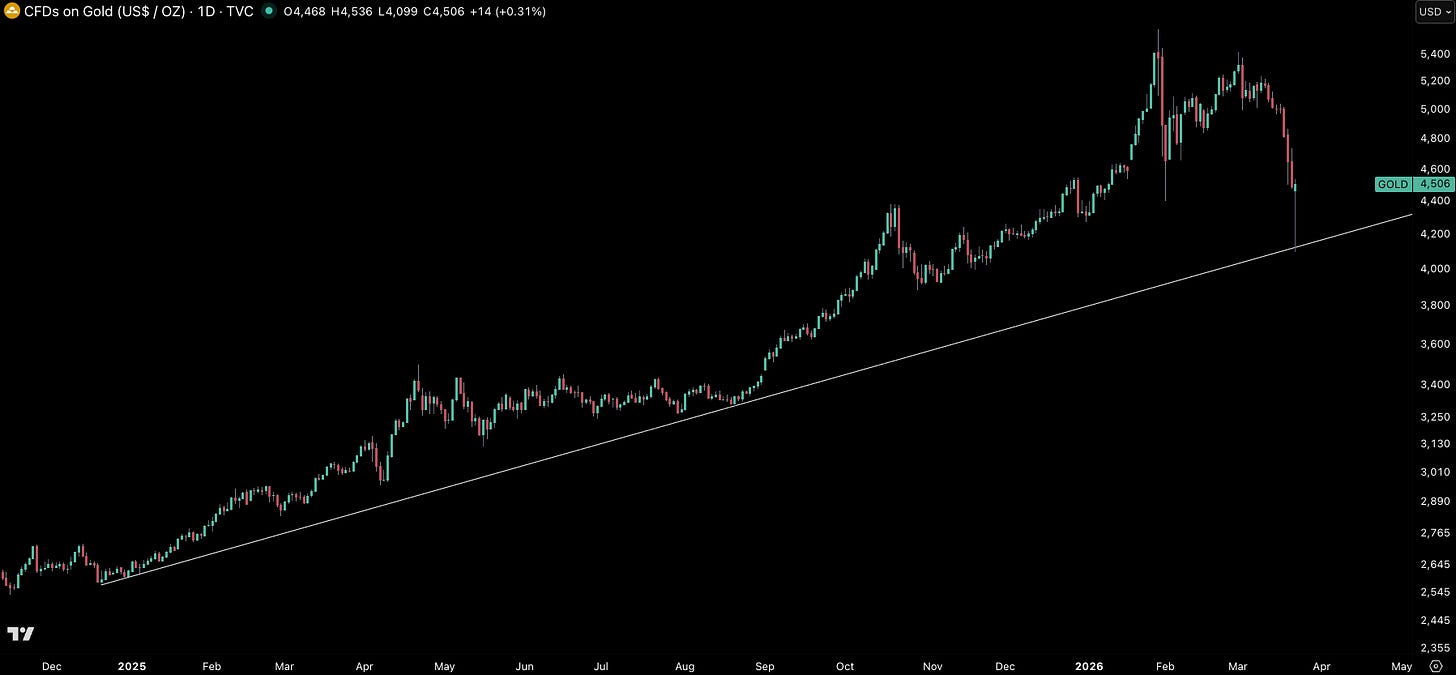
Persistently higher energy prices and a protracted conflict will inevitably buoy inflation prints over the coming months.
However, from a simple price action standpoint, Gold’s swift decline is arguably a mean reversion move at a time when we would expect Gold to be late cycle.
Gold typically weakens when real yields rise and the dollar strengthens, even within late-cycle environments.
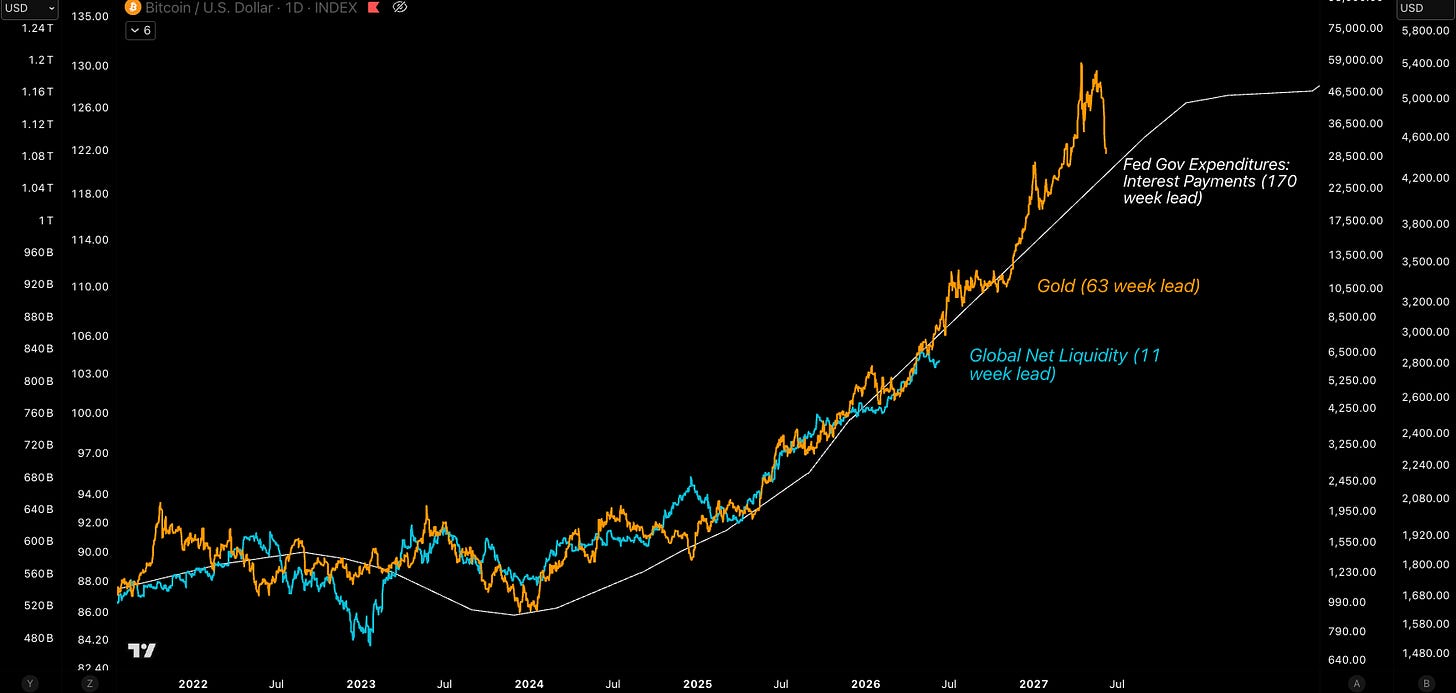
Even if an Iran-driven energy shock keeps inflation elevated and delays rate cuts, central banks typically look through supply-driven inflation.
Higher rates and wider deficits mechanically increase interest outlays—payments that must be made—which inject cash into the system and support liquidity with a lag.
The key framing here is monetary policy is constrained but not freely tightening.
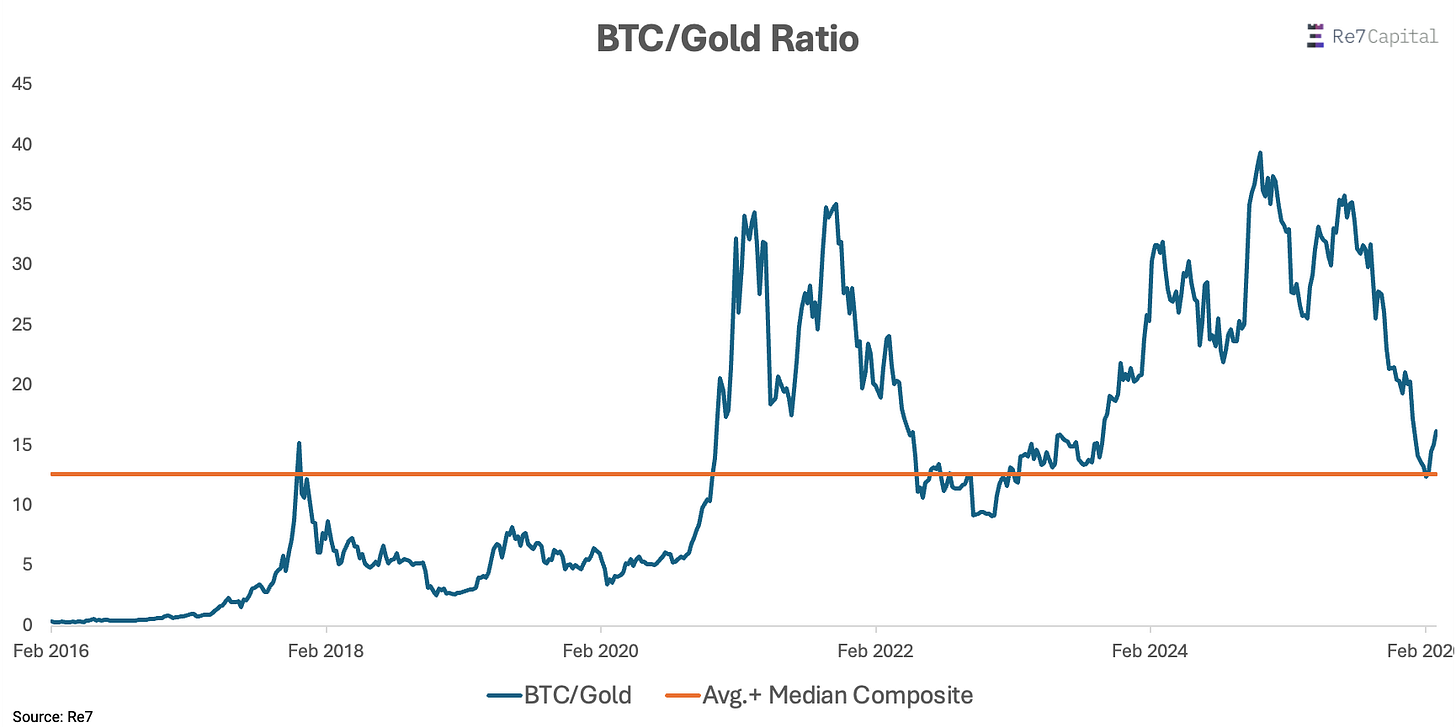
This may help explain the continued relative strength in BTC versus Gold. Momentum strength here for this ratio is not typically indicative of late cycle rollovers (now +30% off 2026 lows).
One interesting observation is the BTC/Gold ratio recently bounced off its 10y average/median composite (~12.3).
Final Remarks
Recent moves highlight how sensitive markets are to shifts in expectations and positioning.
While risks remain, there is still little evidence of a material breakdown in growth or financial conditions. Energy, yields, and liquidity continue to anchor direction.
Until there is greater clarity, the regime holds, albeit in a more fragile state.
State of the Yields
Stablecoin lending yields: ~2.2% on Aave (USDC), still below the ~3.7% 3-month T-bill rate. Variable-rate premiums remain compressed.
Fixed-rate DeFi lending: yield premium in fixed markets narrowing week-over-week.
Pendle:
sNUSD: 8.1% (Jun 2026)
sUSDAi: 6.7-7.0% (Jun-Oct 2026 maturities), compressed ~1-2pp from last week
stUSDS: 5.4% (Jun 2026)
sUSDe holding: ~3.5-3.7%, down from ~4%
ETH yield benchmarks:
Lido staking: ~2.5% (down from 2.7%)
Fluid Lite ETH vault: ~4.6%
Notable: Fluid Lite USDC vault now at ~10% APY, significantly above variable-rate lending alternatives.
Disclaimers
The content is for informational purposes only. None of the content is meant to be investment advice. Use your own discretion and independent decision regarding investments. The opinions expressed in all Re7 public research articles are the independent opinions of the authors at the time of publication and not the opinions of the affiliates of Re7.
Please see here for full disclaimers.